Showing posts with label Bag Sewing. Show all posts

Saturday, December 6, 2025

Sew Your Own Drawstring Gift Tote Video Tutorial


The full video tutorial for the Drawstring Gift Tote sewing pattern is now on the Wholecloth Patterns Youtube channel. I burned some midnight oil to get this out before the weekend. I know I plan to do some Holiday gift sewing on Saturday, and I hope you will too. I've got 2 more sets planned. One in a great green plaid flannel for under the Christmas tree, and the other in an intentionally un-Christmasy fabric for my daughter's birthday. I'll be posting my progress on instagram, and I would love to see what you're making!

This is an easy beginner level sewing pattern. Even if you've never sewed more than a pillowcase, the video will smooth the way for makers of all sewing levels. 

WATCH THE VIDEO

The video instructions are available to everyone, but you'll need a copy of the pattern to follow along. 

BUY THE SEWING PATTERN HERE

Fabric and Supplies for this Beginner Sewing Project

Maybe you noticed I didn't shoot this video in my usual sewing space. We've been doing a little home improvement and the sewing bunker hasn't been accessible (sadly not improving it!), so I've been moving my sewing stuff around the house. Even my regular sewing machine is packed away, and I'm using a Singer Heavy Duty I got for the kids. The upside is that I've assembled a tight kit of sewing essentials; most of them were used in this video. 

Clover White Choco Liner

Cordless Iron

Gingher 8" Scissors

Clear Dritz Ruler

Seam Gauge

Singer Heavy Duty Sewing Machine

Medium Weight Denim (similar)


The red gingham bags shown here are made from an IKEA tablecloth that I bought on clearance at the end of the summer. That tablecloth isn't available anymore so here are a few alternatives. 


Cotton/Linen Red Check

Linen Red Check

Red Gingham Laundered Linen


Green Twill Tape Drawstrings

Red Twill Tape Drawstrings

*some are affiliate links for products I have purchased and use*

*****

Follow Wholecloth Patterns

Etsy: Wholecloth Patterns

Youtube: Wholecloth Patterns

Instagram: @_wholecloth #wholeclothpatterns

Newsletter: Join here

TikTok: @_wholecloth 

Thursday, May 15, 2025

Morris Charm - FREE Earbud Pouch Sewing Pattern


Ever notice that sewing something to use up fabric scraps, just leads to smaller scraps?! I've been think of the Mini Morris Tote as a great scrap busting project, but after spending many weeks sewing nothing but Morris Totes I'm just left with smaller scraps. So, I challenged myself to come up with an even smaller project to use up some of the beautiful scraps I can't bring myself to part with. Today we'll go step by step through sewing a quilted earbud bag charm. It's a cute, beginner friendly project that's a great way to learn a few new sewing skills and use up even the tiniest scraps. The seam finish and construction method is similar to the Morris Totes, so I'm calling this the Morris Charm. 

The Morris Charm has a slip in opening (no hardware necessary) that is just big enough to slide in a headphones case and just snug enough to keep them secure. All of the edges and seams are finished with fabric binding. You can attach it to any bag with the simple hanging loop. 

Let's talk about fabric. Any light weight woven fabric will work. I used scraps of a light weight cotton for the main and backing fabric and quilted it together with a single layer of low loft cotton quilt batting. If you don't have batting, don't buy it for this project. You could substitute a couple layers of flannel, or a scrap of sweatshirt fleece. Anything that will give the fabric a bit of body and doesn't have much stretch. 

Free Pouch Sewing Pattern Video Tutorial

You can watch the full Morris Charm video tutorial on the Wholecloth Patterns Youtube channel. Or follow the instructions below. 


Earbud Bag Charm Sewing Pattern Instructions


To sew the FREE Morris Charm you will need: 

- 20" (51cm) piece of 1/2" (1.3cm) double fold straight grain binding. Make your own with this tutorial.
- 1"x 9" (2.5 x 23cm) rectangle of light weight woven fabric
-  4 1/4" x 7" (11.5 x 17.8cm) rectangle of quilted fabric. You can use pre-quilted fabric, repurpose an old quilt, or make your own with this tutorial.

1. We'll begin by preparing the hanging loop. Fold the strip of fabric in half lengthwise with right sides together, and press the fold into the fabric. Open the fabric back up, and fold each edge, toward the wrong side, so the long edge just touches the first fold. Press these folds into the fabric. Refold the strip along the pressed folds. 
2. Sew the hanging loop closed with a line of stitching about 1/8" from the open edge of the hanging loop. It can be tricky to get this narrow strip to travel smoothly through your sewing machine. My solution is to position the strip over one set of feed dogs, and moved the needle over to the desired position. 
3. Next we will bind the short edges of the quilted fabric. Cut a strip of the binding that is slightly longer than the short edge of the quilted body. Open up one side of the binding. With right sides together align the edge of the binding with the short quilted edge. Pin in place. Sew along this edge, using a scant 1/2" seam allowance. 
4. Press the binding away from the quilted fabric, be careful not to disturb the other binding folds. 
5. All the binding to fold over the edge of the quilted fabric. Position the back fold of the binding so that it just covers the previous line of stitching. Pin in place. 
5. With the right side facing up, topstitch on the binding, about 1/8" from the seam. 
6. Trim the binding so it is even with the edges of the quilted piece. Repeat the binding steps with the other short edge. 
7. Find the center point of the long edges. Fold the piece in half lining up the bound edges. Part the center with a pin at each side. 

8 Attach the hanging loop. Fold the hanging loop loosely in half. Center the ends along one long edge, aligning the ends with the edged of the quilted piece. The pin marking the center point should be between the two ends, as shown. 
9. Shape the pouch. Position the quilted piece with the right side facing up, and the hanging loop along the upper edge. Fold the right edge, so right sides are touching, and the binding edge is centered on the pin. Pin or clip in place along the upper edge. 
10. Fold the left edge, so right sides are touching, and the inner edge of the right binding aligns with the inner edge of the left  binding, as shown. Pin or clip in place. At this point you can pause and baste this edge together.
11. Attach the seam binding. Cut a piece of binding that is 2 inches longer than the edge of the pouch. Open one side of the binding and align the raw edge with the edge of the pouch, with an even amount of overhang at each end. Sew a scant 1/2" seam.
12. Press the binding away from the pouch, being careful not to disturb the other folds in the binding. Turn the pouch over so the back is facing up. Fold the over hanging ends of the binding around to the back of the pouch. 
13.  Refold the binding so that it wraps around the raw edge of the pouch. Adjust the binding so that it cover the previous line of stitching. Pin or clip in place. With the right side facing up, topstitch alone the binding about 1/8" from the seam. 
14. Position the end of the hanging loop so that it is stitch out of the opening. (This hold the loop out of the way when sewing the next seam.) Repeat the steps to bind the other pouch edge. 
15. All that's left to do it turn it right side out, poke out the corners and give it a good press. 
17. Done! Share your pouch on instagram with #wholeclothmorris.

Follow Wholecloth Patterns

Etsy: Wholecloth Patterns

Youtube: Wholecloth Patterns

Instagram: @_wholecloth #wholeclothpatterns

Newsletter: Join here

TikTok: @_wholecloth 


Thursday, October 3, 2024

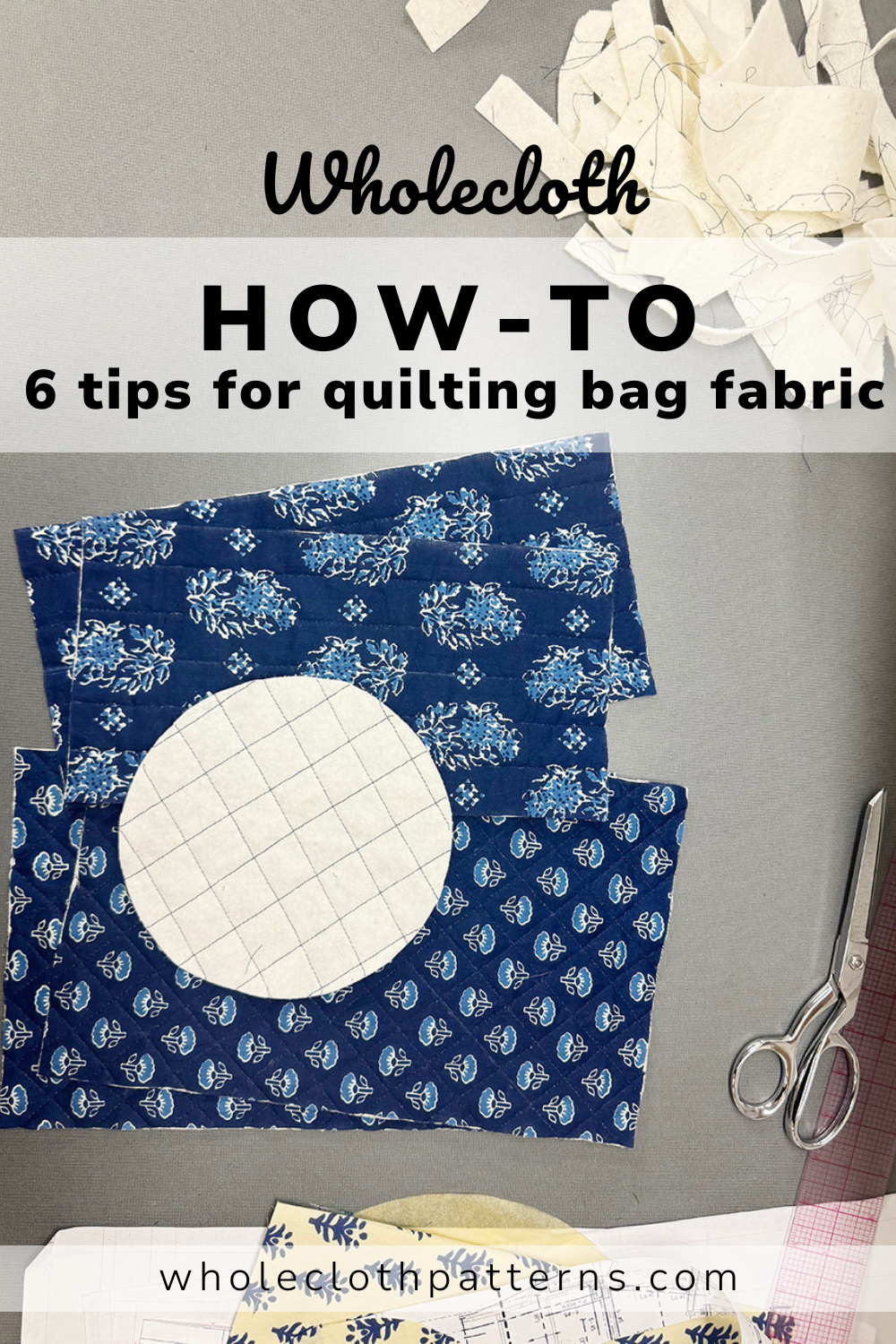
6 Tips for Quilting Fabric for Bag Sewing


Before I switch gears to new patterns and fall sewing, let me clear the worktable of my last summer sewing project. The sewalong for the Logan Bag drawstring bucket backpack featured self-quilted fabrics. This is a great technique for personalizing handmade bags, so I've put together a how-to video and a list of tips focused on quilting fabrics for bag making. You can use these techniques for just about any bag or garment sewing project. 

Quilted fabric is a great choice for handmade bags. The layers of quilt batting, fabric, and stitches work together to provide the structure and durability that can stand up to the wear and tear of a handbag. Changing the weight of the fabric, the fiber and thickness of the batting, or the spacing of the quilting allows you to manipulate the structure of your finished fabric. You could use pre quilted fabric, but you'll have better choices and more control if you quilt it yourself.  

These tips are directed toward quilting small or shaped pieces of fabric where avoiding distortion can be a bit tricky. You could quilt the fabric and then cut out your pattern pieces (a completely legit way to tackle a quilted project), but I prefer to quilt the pattern pieces individually. It gives me more control over the placement of the fabric print and the lines of quilting on the finished project. 

A full How-to Quilt Fabric for Any Bag video tutorial is on the Wholecloth Patterns Youtube channel now. Or scroll down to see my tips for quilting fabric to make bags. 


6 Tips for Quilting Fabric to Make Bags

1. Pin across the whole fabric.
The key to successful quilting is to prevent the fabric from slipping and sliding around on top of the batting. Don't just pin around the edges of the fabric, space the pins across the body of the fabric at 2-3" intervals. These fixed points keep the fabric from slipping around while you sew those first few lines of quilting. 

2. Cut the quilt batting bigger than the fabric piece.
When sewing quilted bags cut the pattern pieces out of your main fabric, but not the quilt batting or backing fabric. Cut the batting and backing about an inch bigger than the main fabric pieces. This has 2 advantages. First you can precisely position your quilt lines relative to the shape of your finished bag. Second, any minor shrinkage or distortion to the main fabric pieces due to quilting can be adjusted before you construct your bag. 
3. Use a walking foot. 
When quilting any fabric, or sewing very thick squishy fabrics, switch to the walking foot for your sewing machine. The walking foot lifts up as the needle goes down reducing the chances that the presser foot will push the fabric out of alignment as it sews. 
4. Start quilting in the middle.
It's tempting to start quilting at one edge of the pattern piece and work across the whole body of the fabric in one wave, but this increases the chances of distorting the fabric as you quilt. Begin your first line of quilting at the center of the fabric and work toward the edges. Starting in the middle shortens the distance between the starting line and the finish line of quilting, reducing the length of fabric that can be shifted out of place. 

5. Alternate the direction of the quilting.
If you first sew from bottom to top, next sew from top to bottom. This zig zag movement across the pattern piece helps to correct, rather than increase, any shift in the fabric. 
6. Sew over the edges.
Do not backstitch! It can be counterintuitive for bag makers, and garment sewists who are in the habit of anchoring their seams for strength. When quilting, sew right over the edge of the fabric. The extra perimeter of batting (and possibly backer fabric) will be trimmed off after quilting. It leaves loose ends of of stitching that could make a bag sewist nervous, but those stitch lines will be secured within the seam allowance when you make your bag, and trimming the over run with the batting leaves the neatest edges. 

Ready to sew a quilted bag? Get your copy of the Logan Bag drawstring bucket backpack, and try out your new skills. 


Follow Wholecloth Patterns


Sunday, February 25, 2024

How-to Make Your Own Piping Video Tutorial


Follow this video tutorial to make your own custom piping to match any sewing project. Piping is a crisp, classic way to add structure and define the edges of a handmade bag. The Wholecloth Patterns Fairmount Bag uses piping to define the bottom curve of view A, that might otherwise be easily crushed out of shape. It's also used on the Logan Bag to strengthen the circular bottom seam, and help hold its bucket shape. You could buy piping, but it's easy to make and gives you complete control over the look and quality of your finished bag. 

Tools for Making Piping

The only semi-specialty tool you need to make piping is the zipper foot for your sewing machine. The zipper foot allows you to sew right up against the edge of the piping cord when you're sewing the piping and when assembling your bag. The foot I use in the video is the Bernina #4. You'll want to find the foot that works with your sewing machine.  A zipper foot is essential for sewing bags, and is included with most sewing machines. 

In addition to the zipper foot you'll need a few very basic sewing tools. We'll use scissors, a marking tool, and a ruler. 

Supplies for Making Piping

Piping is basically a string wrapped in fabric. From light weight cotton lawn to upholstery fabric, any woven fabric can be used to make piping. Keep in mind that heavy fabrics will work best with thicker piping cord, and lighter fabrics will give the best coverage to thinner piping cords. In the video I'm demonstrating with light weight denim from Joann. I've also made bags piped with corduroy, or canvas. 

Of course, the filler in piping isn't actually string (although I've used yarn in a pinch). For the most predictable results use the specialty product called piping cord. My favorite is a cotton filler cord surrounded by polyester braid. The cotton is sturdy but easy to work with, and the surrounding braid allows the cord to move smoothly inside the finished fabric cover. The piping cord in the tutorial is from Great Lakes Cordage on Amazon. You can buy small quantities of many sizes of cord, and variety packs of multiple sizes. This variety pack has all 3 sizes discussed in the tutorial. It's a great way to experiment with the scale of your piping to the fabric and project. Once you try piping cord you'll never improvise with yarn or string again. 


DIY Piping is used on the Wholecloth Patterns 
sewing patterns. 


Follow Wholecloth Patterns

Etsy: Wholecloth Patterns

Youtube: Wholecloth Patterns

Instagram: @_wholecloth #wholeclothpatterns

Newsletter: Join here

TikTok: @_wholecloth 


Tuesday, February 20, 2024

How- to Make Double Fold Bias Tape Video Tutorial


Follow this video tutorial to make your own double fold bias tape for a perfect handmade seam finish. Learn what fabric to use for bias tape, how-to find the bias of your fabric, and how to make your own 1/2" double fold bias tape with common sewing tools, no gadgets needed. This technique is perfect for making the short lengths of bias tape required for bag sewing, and is used in the Wholecloth Patterns Fairmount Bag

Why make your own bias tape?

Bias bound seams are a durable and professional looking finish for bag sewing. They are also a great way to add character to your bag and continue the exterior color scheme on the interior of the bag. 

What is the best fabric for making bias tape?

Light weight woven cotton such as shirting, lawn, batiste or quilting cotton is best fabric for making bias tape. Finished bias tape has 4 layers of fabric, these light weight fabrics maintain a low profile when applied to a finished seam. Avoid heavy or bulky fabrics that will result in a bulky finished seam. Use a fabric like cotton that holds a crisp crease when ironed. You'll want your bias tape to hold its shape when you work with it, and a crisp fold will make 

In the video I use this light weight cotton hand block printed fabric from Indian Stores on Etsy. It coordinates nicely with this hand block print from the same shop. 

Tools for making bias tape.

To make your own double fold bias tape you'll need a ruler, scissors, a fabric marker and in iron. These are all basic tools you probably already have in your sewing kit. There are bias tape making gadgets, that you may want to try if you're making yards of bias tape for quilt or garment sewing, but for this tutorial we'll focus on the low tech way to make it yourself. It's perfect for the small quantities of bais tape used for bag making. 

The bias bound seam finish is used on the
 Wholecloth Patterns Fairmount Bag. 
Get the Pattern

***

Follow Wholecloth Patterns

Etsy: Wholecloth Patterns

Youtube: Wholecloth Patterns

Instagram: @_wholecloth #wholeclothpatterns

Newsletter: Join here

TikTok: @_wholecloth 


Saturday, December 9, 2023

How-to Add a Lining to the Wholecloth Project Bag


Today we're going to hack the Wholecloth Project Bag sewing pattern by learning how-to add a lining to the bag. I love the simplicity of making a bento bag from a single piece for fabric, but it does take a little extra time to finish the hem, and seam allowances to perfection. Giving the Project Bag a full lining creates a fully reversible bag. It also makes finishing the bag even easier. If you're a new sewist, this is a great place to start with Wholecloth Patterns. 

The video tutorial of this pattern variation is a bonus track to the Wholecloth Project Bag sewalong. After learning how to sew a thoughtfully finished bag, we use the pattern as a base to mix up the finishing.

Get the sewing pattern:

Join the mailing list:

Watch the Sewalong Playlist:

Share what you've made!


Follow Wholecloth Patterns

Etsy: Wholecloth Patterns

Youtube: Wholecloth Patterns

Instagram: @_wholecloth #wholeclothpatterns

Newsletter: Join here

TikTok: @_wholecloth 


Wednesday, December 6, 2023

Learn to Sew a Wholecloth Project Bag with the Sewalong Video Sewing Tutorial

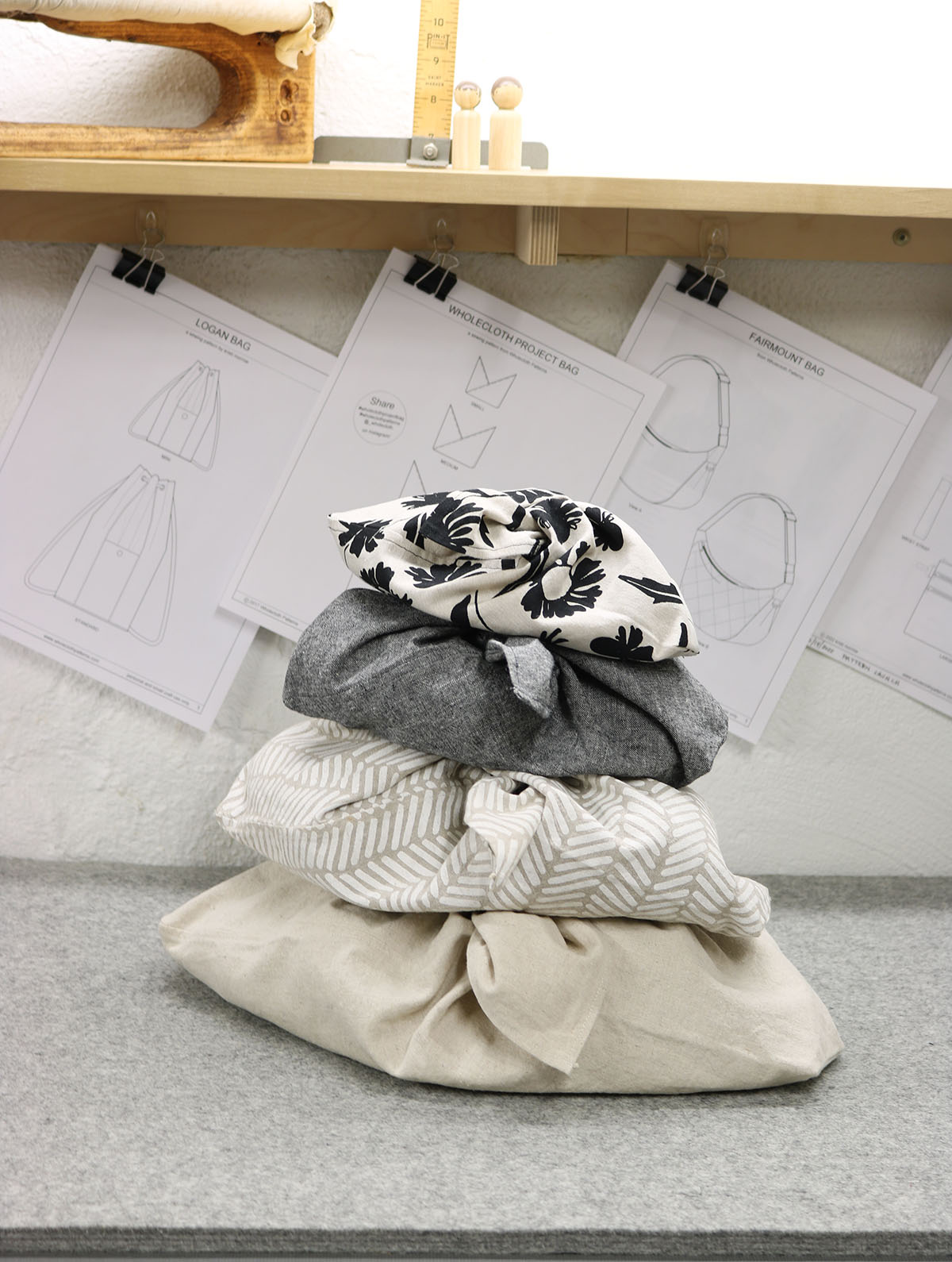
Are you sewing a Wholecloth Project Bag? You've come to the right place. Below you'll find video tutorials for the Wholecloth Project Bag Sewalong, were I'll teach you how to sew a bento bag with clear video instructions. The sewalong is broken up into 3 easy to follow sections. The first is a short overview to familiarize yourself with the design and plan your bag. The second tackles the pdf sewing pattern pieces. I'll walk you through the process of turning the digital pdf file into a physical pattern, and cutting out the fabric. The third is sewing the actual bag. Each video section includes a list of related links to any noteworthy tools or fabrics. This is a quick sew, and beginner friendly project. The videos will make it accessible to even more sewists. You'll have a set of all 4 sizes by sun down (or sun up depending on what kind of sewist you are!).

Thanks to everyone who followed along with the Wholecloth Project Bag sewalong through the newsletter. I appreciate your attention at this bonkers time of year! If you're sewing a Wholecloth Project bag please use the hashtags to share your work. I would love to see what you make! If you'd like first notice of future Wholecloth Patterns sewalongs and new pattern releases join the email list.  

Get the sewing pattern:

Join the mailing list:

Watch the Sewalong Playlist:

Share what you've made!

-----------------------------------------------------------------------------------------------------------------------------

Day 1:  pattern overview, size comparison and fabric recommendations

Notes on Fabric:
You can use just about any woven fabric to make a Wholecloth Project Bag. I go over a few of my favorites in the video, but don't limit yourself to my picks. This quick project is great for experimentation. A crisp new yard and a half (1.5 meters) of 43in/109cm wide fabric will make a whole set of bags. Don't prewash it, you'll need the full width for the extra large bag, and won't want to loose any to shrinkage. A few of the fabrics I said were Essex Linen in the video are cotton/linen Andover Fabrics. This is a very similar fabric and great for bags. 

Day 1 Video Links:

-----------------------------------------------------------------------------------------------------------------------------

Day 2: print and assemble the pdf, trace the size we'll make, draft our own pattern and cut the fabric
Notes of Tools:
You'll need a few basic household tools to assemble the pdf. I like to cut the margins from the pdf with plain old scissors and assemble it with plain old tape. I always trace the size I'm going to make (rather than cut the print out) onto architectural tracing paper. It's durable, easy to pin, and inexpensive. The only down side is that you can't iron it. I also used it to draft the pattern in the video. A see-thru ruler is handy when tracing or drafting the pattern. 

Notes on Drafting Instructions:
Most versions of the pattern include a chart and diagram with the dimensions to draft your own pattern on page 2. If your pattern does not have them I would be happy to send you an updated version. Please send an email to wholeclothpatterns@gmail.com and include the Etsy username you used to purchase the pattern. All other information is the same. The drafted sizes are the same as the printed pattern pieces. 

Day 2 Video Links:

-----------------------------------------------------------------------------------------------------------------------------

Day 3: We'll sew a Wholecloth Project Bag from start to finish!

Day 3 Video Links:

Follow Wholecloth Patterns

Etsy: Wholecloth Patterns

Youtube: Wholecloth Patterns

Instagram: @_wholecloth #wholeclothpatterns

Newsletter: Join here

TikTok: @_wholecloth 


Sunday, December 4, 2022

How to add a decorative tag to the Wholecloth Project Bag

Adding a decorative tag to the Wholecloth Project Bag is a fun embellishment and a great way to identify bags made from the same fabric. I made this set of Project Bags as reusable Christmas wrap. They're an easy way to wrap bottles of wine, sweatshirts, and pajamas, or a fitting presentation for hand knits. You can add these to your easily add these tags in a few simple steps. I've whipped up a quick tutorial, you'll find it below. 

The following is a tutorial for the tag embellishment, and is meant to be used with the Wholecloth Project Bag sewing pattern. 

Instructions. Prepare your Wholecloth Project Bag pattern piece as described in the pattern instructions. 


Prepare the tag. Cut a rectangle of fabric that is 3" x 2 1/4". Press a 3/4" fold into each short side of the rectangle, so that wrong sides are touching (left diagram). Press. Fold in half perpendicular to the previous folds, so that the edges of the previous folds are hidden (right diagram). Align edges, press.

Attach the tag. Position the prepared tag 1 1/2" from the upper right notch, as shown.  Align the open edge of the tag with the raw edge of the main fabric piece. Pin in place. Assemble the Project Bag beginning at step 1 of the Wholecloth Project Bag pattern instructions. 

A few notes on how to handle the tag during bag construction:

Step 8 - press the tag seam allowance toward the bottom of the bag on the wrong side of the bag, and press the portion of the tag on the right side toward the bag opening. 

Step 10 - Trim the tag seam allowance  with the lowers seam allowance in Step 10. Complete the bag as instructed. 

Step 14 - be sure the flap of the tag on the right side held clear of the topstitching.

Share your project.

#wholeclothprojectbag

@_wholecloth


***

Follow Wholecloth Patterns

Etsy: Wholecloth Patterns

Youtube: Wholecloth Patterns

Instagram: @_wholecloth #wholeclothpatterns

Newsletter: Join here

TikTok: @_wholecloth